
The King’s Cross
“God made him who had no sin to be sin for us, so that
in him we might become the righteousness of God.”
2 Corinthians 5:21 (NIV)

Spring officially arrived last week. Across Alabama the azaleas are in full bloom and many families have headed to the beach for Spring Break. My thoughts, however, have already turned to Holy Week and Easter. The three large crosses in front of our church are a visual reminder that Easter is almost here.
The Bible study I just finished, Scenes from the Final Week by Nashville’s Paige Brown, focuses on the final week of Jesus’ life. Beginning with Jesus’ Triumphal Entry into Jerusalem and ending with Jesus’ resurrection, Brown follows the events of that first Holy Week as recorded in the Gospel accounts of Matthew, Mark, and Luke. Most of today’s post are from my notes taken during Paige Brown’s online Bible study and the resources listed at the end of this post.

All four Gospels are Passion narratives with long introductions asking and answering the important question, “Who is Jesus?” Almost one-half of each book is devoted to the events that happened during Jesus’ final week. Filled with tragedy and triumph, it was the week that changed the world. Jesus is absolutely the King, but he is coming to be slaughtered on a cross, not as a victim, but as a willing volunteer.
Three crosses are raised on Golgotha’s hillside on that first Good Friday. On the central cross one man is dying FOR sin. His is the Cross of Redemption. On one side of Jesus is a man dying IN sin, barking demands to Jesus even as he’s dying. On the other side, another man is dying TO sin and asking Jesus to remember him when he comes into his Kingdom. This is the gospel in prepositions, those little words that make all the difference.
Most of us if we’re honest, don’t like to look on Christ’s cross for very long. It was a cruel instrument of suffering and death. We much prefer to skip ahead to Sunday’s miraculous resurrection and proclaim, “He is risen!” But we need not only to look, but to consider what the cross really means.

Yale theologian Richard Niebuhr once described what most of us want as: “A God without wrath, brought men without sin, into a kingdom without judgment, through the ministrations of a Christ without a cross.”
John Stott in The Cross of Christ writes:
“The essence of sin is man substituting himself for God; the essence of salvation is God substituting himself for man. Man asserts himself against God and puts himself where only God deserves to be. God sacrifices himself for man and puts himself where only man deserves to be. Man claims prerogatives which belong to God alone, while God accepts the penalty which belong to man alone.”
The heart and hub of the whole redemption story from beginning to end is substitutionary atonement. On the cross Jesus was not moving our hearts; he was taking our place. His death is a substitution and sacrificial payment for my sin. According to the scriptures, God doesn’t forgive sin; he forgives sinners. Sin must be paid for. Only then God can forgive us. God’s love and justice meet at the Cross of Christ and Jesus declares, “It is finished!”
Author Sinclair Ferguson calls it “The Great Exchange.”
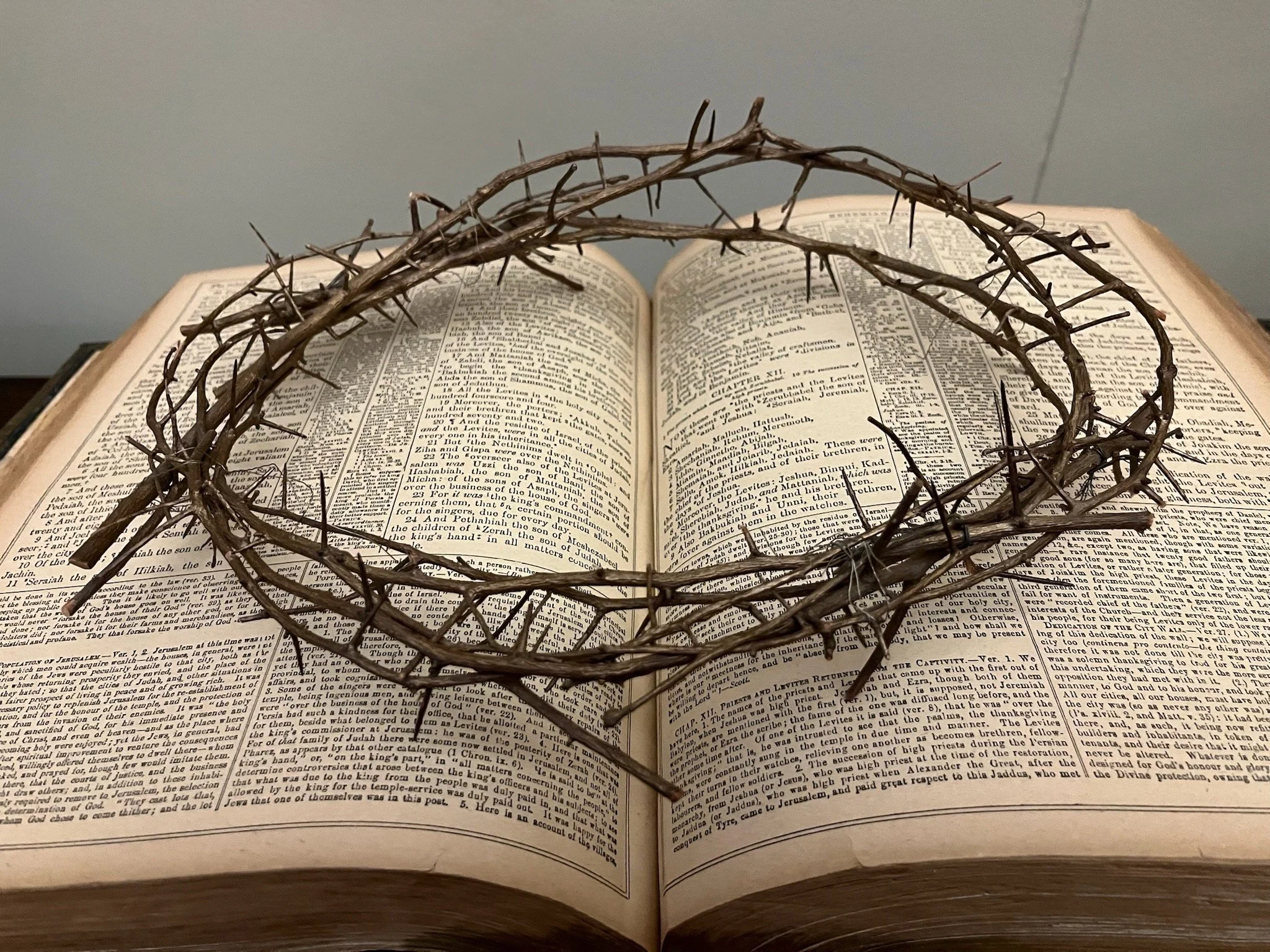
He was cursed so we could be blessed;
He was wounded so we could be healed.
He was stained so we might be washed clean.
He was crushed that we might be made whole.
He carried our guilt that we might be declared righteous.
He was defeated that we might have the victory.
He was plunged into darkness that we might walk in the light.
He died so that I can live.
He took my place so that I can take his place.
That is the central message of the Scripture.
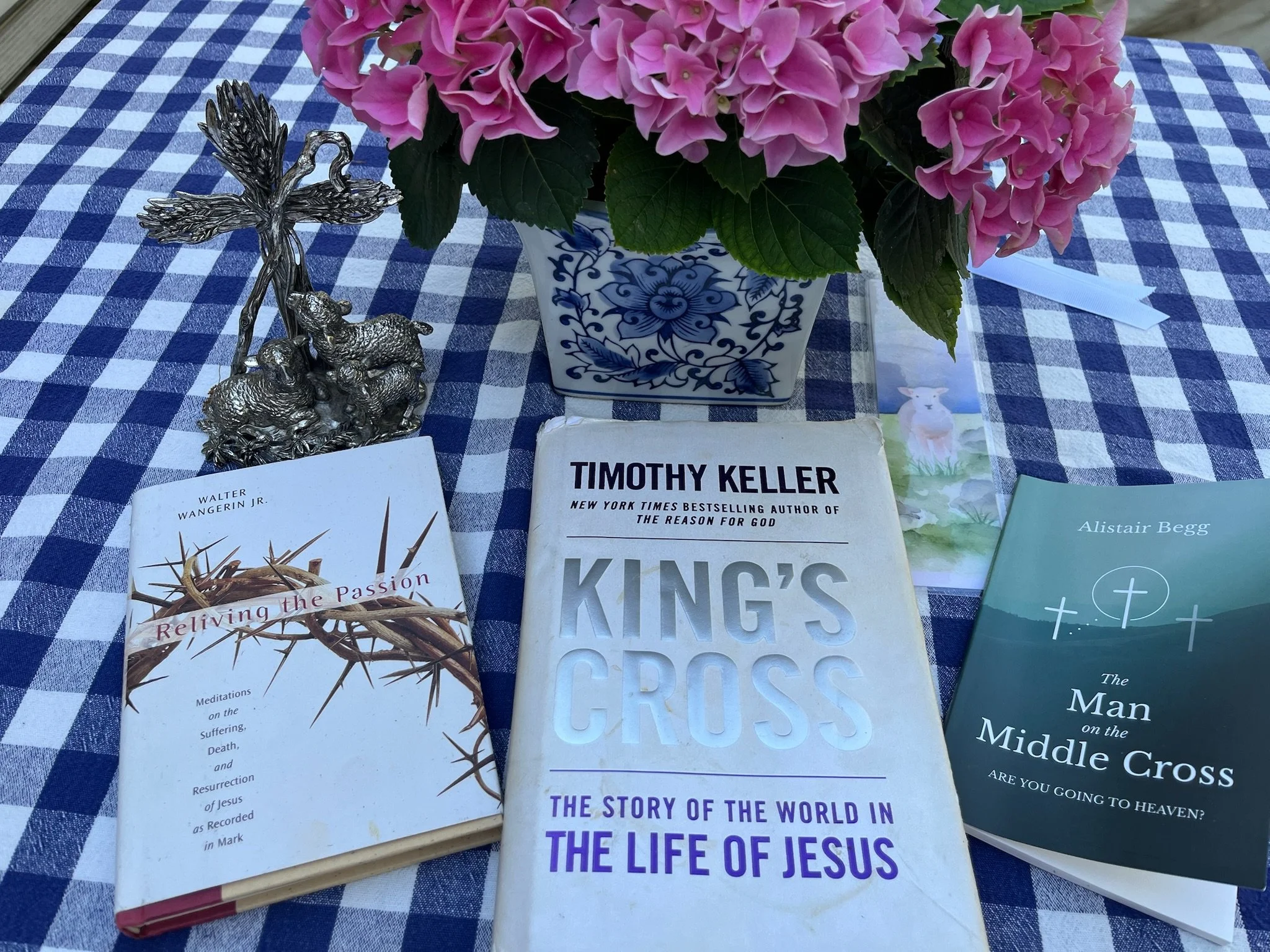
Lent is a time of reflection, confession, and repentance as we consider what Christ did for us on the cross. Some of my favorite Holy Week resources include:
The King’s Cross, the Story of the World in the Life of Jesus, Tim Keller (later republished as Jesus the King)
The Man on the Middle Cross, Alistair Begg
Reliving the Passion, Walter Wangerin, Jr.
Briarwood Presbyterian’s Holy Week Devotional
But the best resource for Lent is the Bible itself. Why not read the book of Mark and trace Jesus’ steps that final week as he goes to the King’s Cross? It was the week that changed the world!